Sensorial Learning: How Montessori Strengthens the Senses & Brain Development
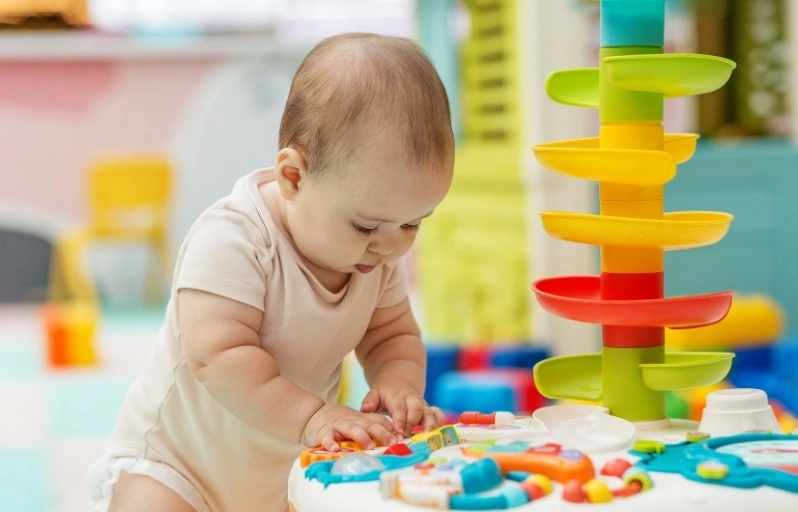
Children learn about the world first through their senses, touching objects, observing colors, smelling familiar scents, and listening to new sounds. In the Montessori method, this natural curiosity becomes the foundation for learning. Sensorial education is a core component of every Montessori classroom because it helps children refine their senses, organize information, and build pathways in the brain that support future academic success.
At Joyous Montessori, we believe that when children explore with their senses, they build stronger attention, memory, and problem-solving skills. Sensorial activities give young learners the tools they need to make sense of their environment while boosting confidence and independence along the way.
What is Sensorial Learning in Montessori?
Dr. Maria Montessori discovered that children develop and absorb information best when they are given opportunities to engage their senses. Sensorial materials are carefully designed to help children identify differences in:
Size
Shape
Color
Texture
Sound
Smell
Weight
Temperature
Through hands-on materials and guided exploration, children refine their ability to observe, categorize, and understand what they experience. These cognitive skills are the building blocks for concepts in math, language, and science in later years.
How Sensorial Learning Supports Brain Development
Sensorial work is more than just seeing and touching; it boosts neural growth in measurable ways:
✔ Strengthens concentration : Children stay deeply focused on sorting, matching, and arranging materials, a skill that supports later classroom success.
✔ Enhances memory and reasoning : Comparing objects helps the brain recognize patterns and retain information.
✔ Builds problem-solving skills : Every sensorial material has a built-in challenge, encouraging children to think, evaluate, and try again.
✔ Supports language development : Children learn new vocabulary to describe their observations: long/short, rough/smooth, light/dark.
✔ Prepares for academic learning : A child mastering size discrimination with the Pink Tower is laying a foundation for math concepts like sequencing and measurement.
Sensorial work changes the brain, empowering children to think more clearly and confidently.
What Do Sensorial Activities Look Like in a Montessori Classroom?
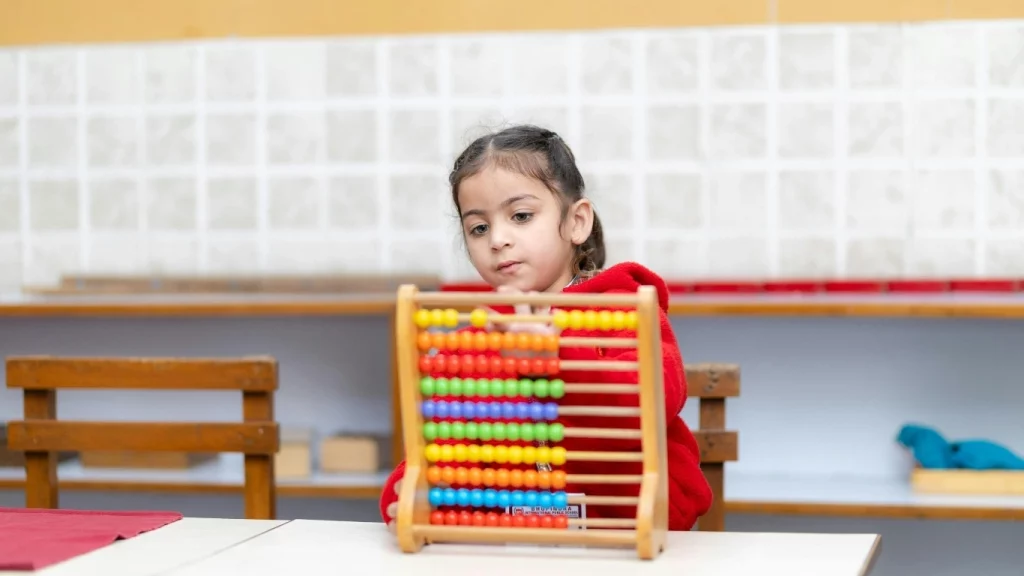
In a Montessori environment, sensorial learning experiences are thoughtfully designed to help children explore the world through structured and meaningful play. These activities vary by age and readiness, but each one encourages children to observe, compare, categorize, and understand their surroundings with greater clarity.
Here are a few common ways sensorial learning comes alive in our classrooms:
Sorting and Matching Activities
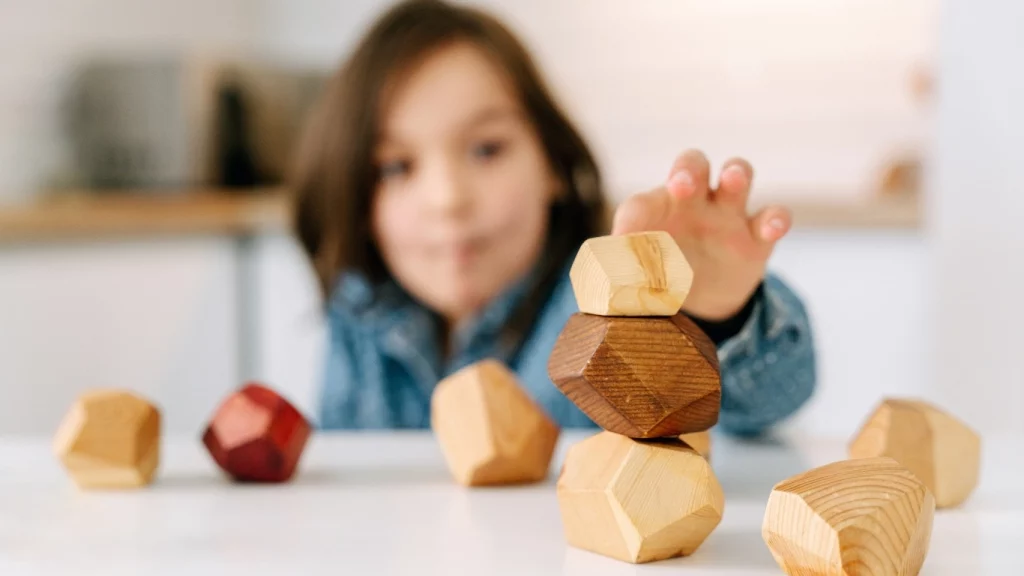
Children group items by size, shape, color, or texture, strengthening visual and tactile discrimination.
Sound and Listening Exercises
Activities may include identifying environmental sounds or matching similar tones to improve auditory focus.
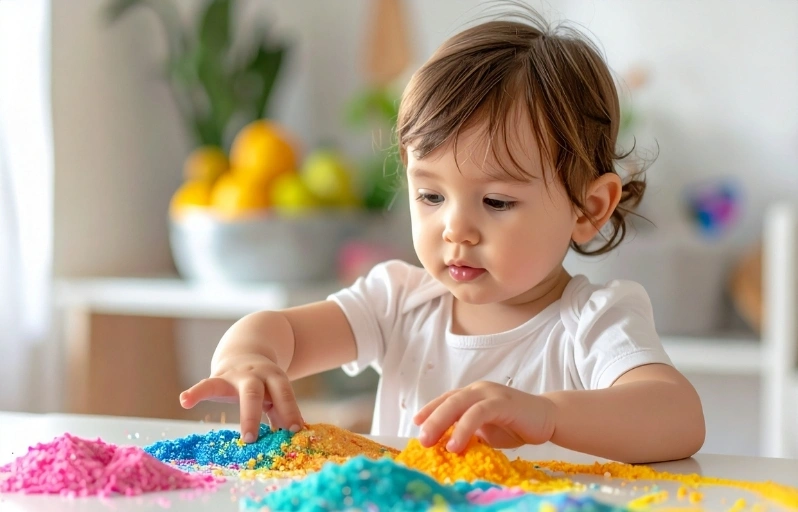
Texture and Touch Exploration
From smooth to rough, soft to firm, children develop strong sensory awareness and descriptive language.
Temperature & Weight Comparison
Safe, guided interactions help children recognize differences and build logical reasoning.
Smell and Taste Experiences
Children carefully explore scents and flavors to learn about real-world objects and cultural diversity.
Movement and Balance Work
Walking on a line, coordination games, and posture activities refine motor control and body awareness.
These activities are presented one step at a time so children can follow their curiosity while developing critical thinking skills. The focus is not on perfection but on exploration, building confidence through discovery.
Sensorial Learning Encourages Independence
One of the most beautiful aspects of Montessori sensorial work is the control of error. Materials are designed so that if a mistake is made, the child can see it clearly, without a teacher correcting them.
When children feel trusted and capable, learning becomes joyful.
How Parents Can Support Sensorial Learning at Home
You don’t need specialized tools to nurture your child’s senses. Simple home activities can strengthen sensorial development:
Sort socks by color and texture
Compare food flavors, sweet vs. salty
Identify sounds around the house
Play with clay, sand, and water
Match objects by size or shape
Explore nature through a “sensory walk”
Little discoveries at home reinforce classroom learning and strengthen curiosity.
Why Sensorial Learning Matters for the Future
Sensorial activities may seem like playful exploration, and they are! But beneath the fun is powerful learning that prepares children for:
Mathematics → sequencing, spatial understanding
Reading & writing → visual and tactile discrimination
Science → observation and classification
Art & music → creativity, pattern recognition
When children refine their senses, they gain the tools they need to understand more complex concepts later. Sensorial learning fuels creativity while grounding knowledge in real-world experience.
Experience the Power of Montessori Learning
At Joyous Montessori, we create a nurturing environment where children are encouraged to explore, discover, and grow at their own pace. Sensorial materials play a vital role in shaping active thinkers, confident learners, and joyful individuals ready for lifelong success.
We invite you to visit our campus and see how sensorial learning comes alive every day!
Schedule a tour and watch your child’s senses and confidence expand through Montessori!