Skip to content

Blog

Independence and confidence featured image
Independence and Confidence Banner

How Montessori Supports Independence & Confidence in Children
Every parent wants their child to grow into a confident, capable, and independent individual. In early childhood, these qualities don’t develop overnight; they are carefully nurtured through daily experiences, environment, and guidance. The Montessori approach is uniquely designed to support independence and confidence in children from a very young age. At Joyous Montessori, we see this transformation happen every day as children learn not just academic skills, but life skills that shape who they become.

Independence Begins in Early Childhood

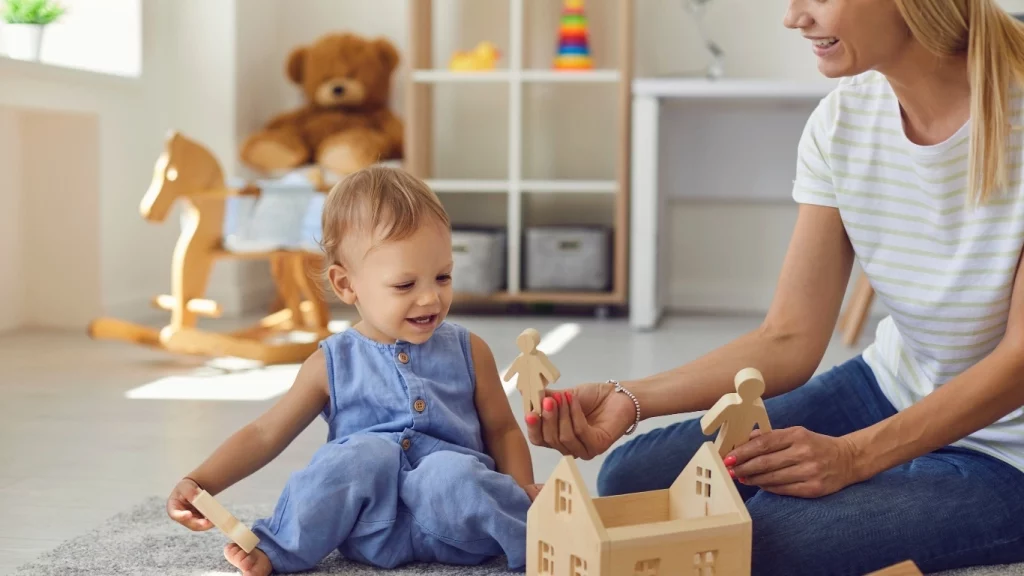
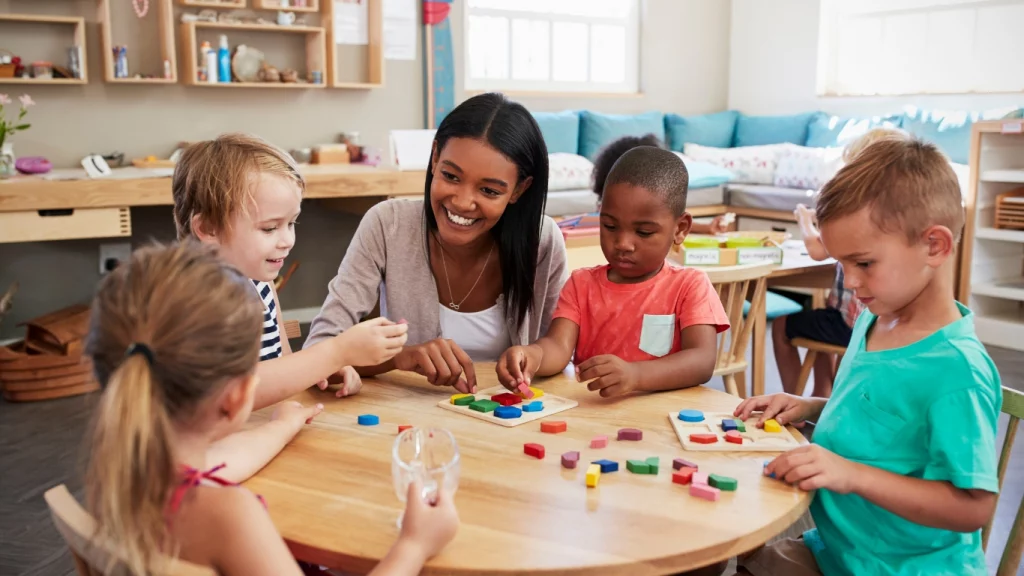
The Montessori philosophy recognizes that children are naturally driven to do things for themselves. From a toddler learning to pour water to a preschooler choosing their own work, independence begins when children are trusted with responsibility. Montessori classrooms are intentionally prepared to support this desire. Materials are placed at child level, activities are self-directed, and routines are consistent, allowing children to move confidently through their day.

Rather than doing things for the child, Montessori educators guide children on how to do things by themselves. This empowers children to take ownership of their learning and builds a strong sense of self-worth.

Independence Begins in Early Childhood
A Prepared Environment That Encourages Confidence

A Prepared Environment That Encourages Confidence

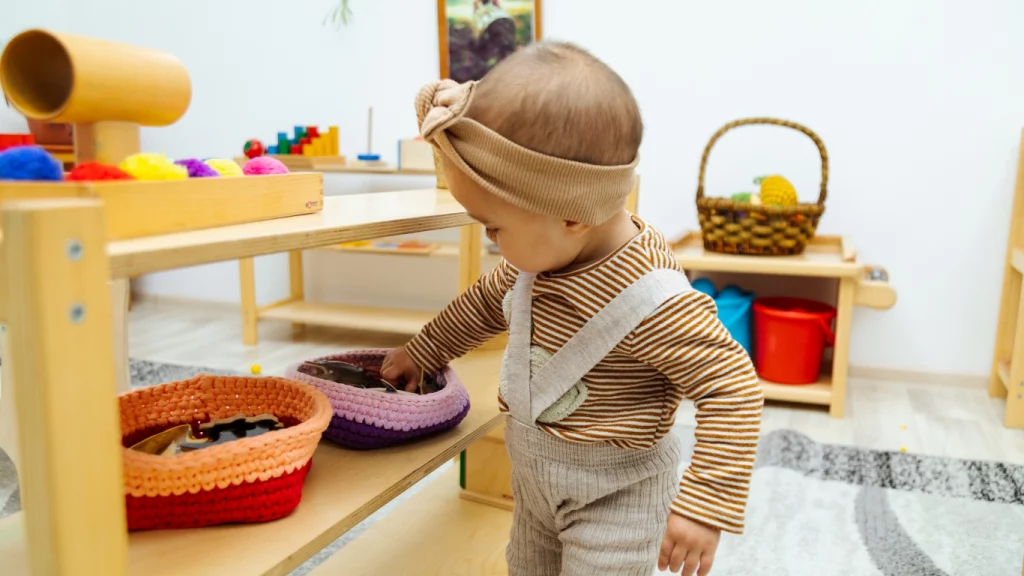
One of the most powerful elements of Montessori education is the prepared environment. Every shelf, material, and workspace is designed with a clear purpose. Children know where things belong and how to use them, which creates a sense of order and security.

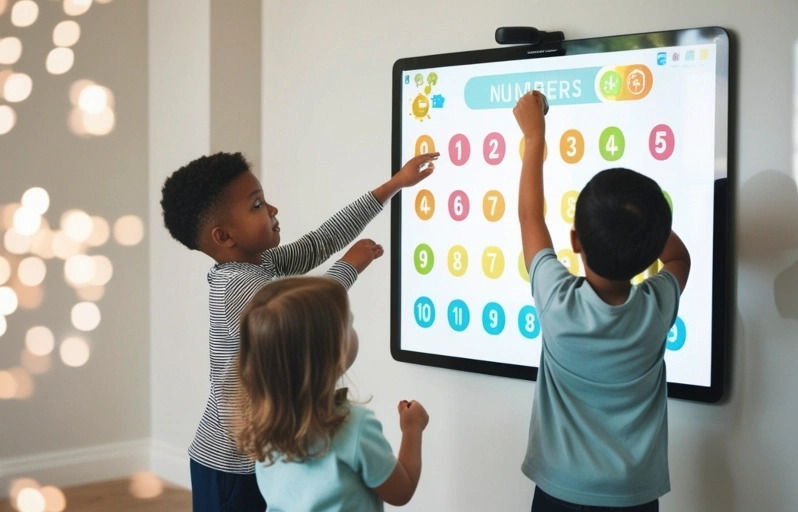
When children are able to independently select activities and complete them successfully, confidence naturally grows. They experience the satisfaction of accomplishing a task on their own, whether it’s completing a puzzle, caring for classroom plants, or practicing early math skills. These small successes add up and shape a child’s belief in their abilities.

Learning at Their Own Pace Builds Self-Assurance

In traditional learning settings, children are often expected to move at the same pace. Montessori takes a different approach by honoring each child’s individual development. Children are free to spend more time on activities that challenge them and move ahead when they are ready.

This individualized pace eliminates unnecessary pressure and comparison. Instead of feeling rushed or left behind, children gain confidence by mastering skills in their own time. When a child feels capable and respected, they are more likely to take healthy risks and embrace new challenges.

Learning at Their Own Pace Builds Self-Assurance
Practical Life Skills Create Real-World Confidence

Practical Life Skills Create Real-World Confidence

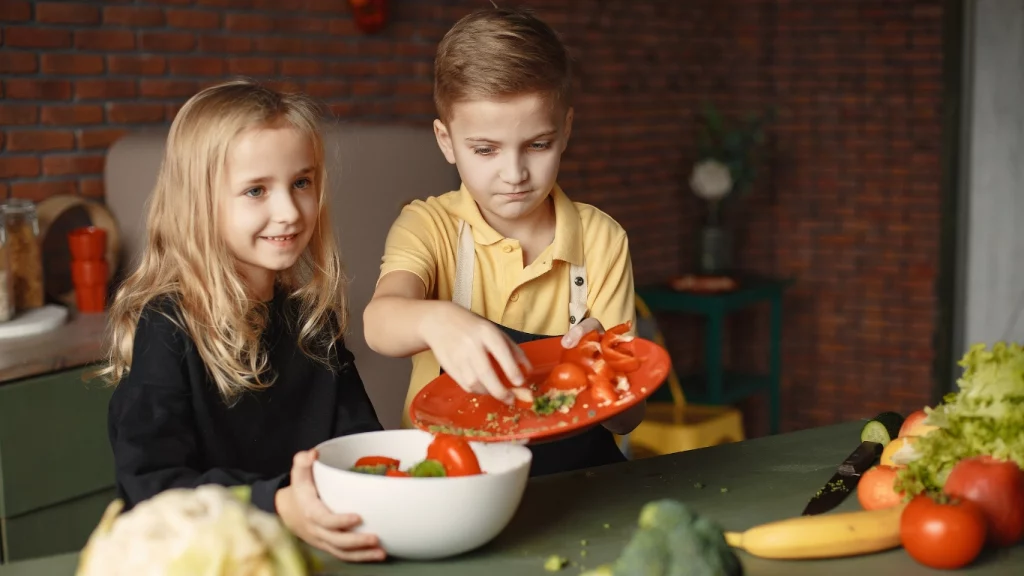
Montessori places strong emphasis on practical life activities, everyday tasks that teach children how to care for themselves and their environment. Activities like buttoning, pouring, cleaning, and food preparation help children develop coordination, focus, and responsibility.

For toddlers and young children, these tasks are powerful confidence-builders. When a child can zip their own jacket or clean up after themselves, they feel capable and proud. These real-world skills reinforce the idea that they are competent individuals who can contribute meaningfully to their surroundings.

Teachers as Guides, Not Directors

Montessori teachers are trained to observe, guide, and support rather than control the learning process. Instead of giving constant instructions, teachers step back and allow children to explore independently. This respectful approach helps children trust their own decision-making.

When mistakes happen, and they do, children are encouraged to problem-solve rather than rely on adult correction. Many Montessori materials are designed with built-in self-correction, allowing children to identify and fix errors on their own. This process builds resilience and teaches children that mistakes are part of learning, not something to fear.

Teachers as Guides, Not Directors
Building Social Confidence Through Respectful Interaction

Building Social Confidence Through Respectful Interaction

Independence and confidence extend beyond academics into social development. Montessori classrooms often include mixed-age groups, giving younger children opportunities to learn from older peers and older children chances to lead. This dynamic builds empathy, communication skills, and leadership.

Children learn how to express themselves respectfully, wait their turn, collaborate, and resolve conflicts peacefully. These experiences help children develop confidence in social settings and prepare them for positive relationships throughout life.

Encouraging Choice and Responsibility

Choice is a cornerstone of Montessori education. Children choose their work, where they sit, and how long they engage in an activity. With this freedom comes responsibility. Children learn to manage their time, respect materials, and complete tasks they begin.

This balance of freedom and responsibility teaches children that their choices matter. Over time, they become more confident in making decisions and trusting their judgment, skills that are essential far beyond the classroom.

Encouraging Choice and Responsibility

Confidence That Lasts a Lifetime

The confidence built in Montessori is not based on praise alone, but on genuine accomplishment and self-discovery. Children learn that they are capable, trusted, and valued. These early experiences shape how they approach challenges, relationships, and learning as they grow.

At Joyous Montessori, our goal is to nurture confident, independent children who believe in themselves and their abilities. By honoring each child’s individuality and encouraging independence every step of the way, we help lay a strong foundation for lifelong success.

If you’re looking for an environment where your child can grow with confidence, curiosity, and independence, we invite you to schedule a tour and experience the Montessori difference firsthand.

Featured image
Banner

Why Kids Ask “Why?” (And Why We Love It at Joyous Montessori)

If you’ve ever spent time with a preschooler, you know the question that seems to pop up every five minutes: “Why?”

Why is the sky blue? Why do I have to eat vegetables? Why do birds fly? Why can’t I stay up late?

For parents, this endless stream of “whys” can sometimes feel overwhelming. But at Joyous Montessori, we believe those tiny questions are actually big windows into your child’s growing mind. In fact, curiosity is at the very heart of Montessori education, and we wouldn’t have it any other way.

The Science Behind “Why”

Children are natural scientists. Every “why” is an experiment, a hypothesis, and a chance to test the world around them. Research shows that asking questions helps kids:

  • Build stronger problem-solving skills
  • Develop language and communication abilities
  • Strengthen memory and critical thinking
  • Boost creativity and confidence

In short, each “why” is your child’s way of making sense of life and laying the foundation for lifelong learning.

The Science Behind “Why”
Why Montessori Encourages Curiosity

Why Montessori Encourages Curiosity

Traditional classrooms often focus on memorization and “right” answers. Kids are expected to listen, follow, and absorb. But in a Montessori classroom, curiosity is celebrated as a powerful learning tool.

At Joyous Montessori, we encourage children to:

  • Explore freely within a prepared, safe environment
  • Choose activities that interest them most
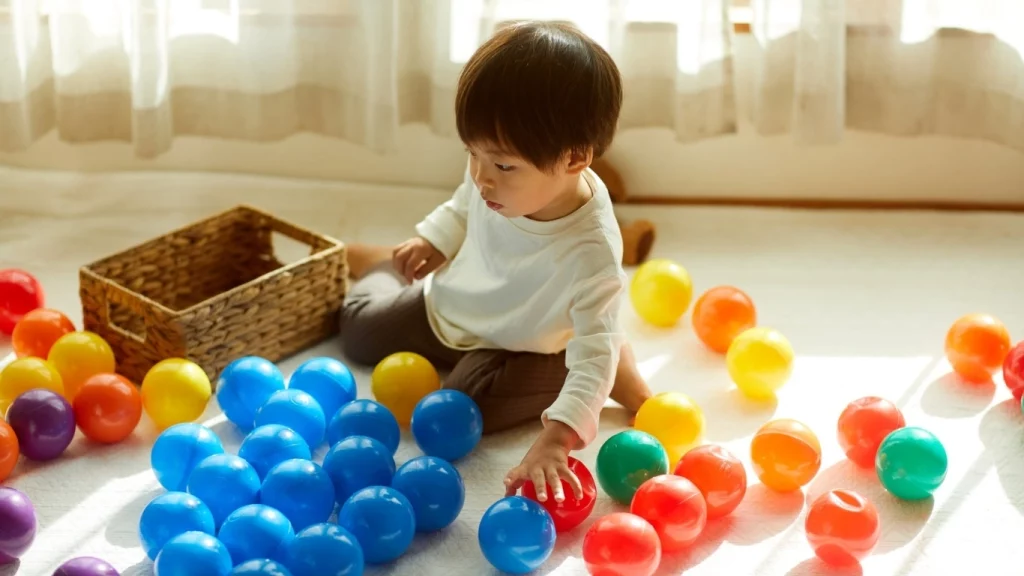
  • Learn through hands-on experiences instead of passive instruction
  • Ask questions and investigate rather than accept answers at face value

This approach transforms “Why?” into a journey of discovery rather than a point of frustration.

How Teachers Respond to “Why” in Montessori

Instead of shutting down a child’s question with a quick response, Montessori guides (teachers) use questions as opportunities to spark deeper thinking. For example:

  1. Child: “Why is the plant leaning toward the window?”
  2. Teacher: “That’s interesting! What do you notice about the light? Do you think the plant might be reaching for something?”

This kind of response does two things:

  1. It acknowledges the child’s curiosity as valuable.
  2. It encourages the child to explore further, maybe even by experimenting, moving the plant, and observing what happens.
How Teachers Respond to “Why” in Montessori

In this way, every “why” becomes the start of an investigation, not the end of the conversation.

The Joyous Montessori Difference

The Joyous Montessori Difference

At Joyous Montessori, we understand that every child learns at their own pace. Curiosity is not just tolerated, it’s embraced as part of daily life. Our classrooms are designed to encourage wonder and discovery:

  • Hands-on materials that invite children to touch, explore, and experiment
  • Mixed-age groups that allow younger children to learn from older peers, and vice versa
  • Freedom of choice that helps kids follow their natural interests
  • A calm, respectful environment where questions are valued and children feel safe to express themselves

By nurturing curiosity, we prepare children not just for school, but for life.

Why Parents Love Our Approach

Many parents tell us they notice a big difference when their children experience Montessori learning. Kids become:

  • More independent (“I can do it myself!”)
  • More confident in asking questions and solving problems
  • Better at expressing emotions and thoughts
  • Excited to share discoveries at home (“Mom, did you know…?”)

These are the lifelong benefits of honoring that little word why.

Helping Parents Embrace the “Why” at Home

We know parents sometimes struggle with the constant questions. Here are a few Montessori-inspired tips to keep curiosity alive at home:

Pause before answering

Pause before answering

Ask your child, “What do you think?” to spark their own reasoning.

Explore together

Explore together

If you don’t know the answer, look it up, experiment, or observe together.

Encourage hands-on learning

Encourage hands-on learning

Kids learn more by touching, moving, and experiencing than by just listening.

Celebrate curiosity

Celebrate curiosity

Instead of sighing at the 50th “why,” try to see it as a sign of growth.

When children feel their curiosity is respected, they stay engaged and eager to learn.

The Big Picture: Why We Love “Why”

At Joyous Montessori, we don’t see “why” as a nuisance. We see it as a gift. A curious child is an engaged child. An engaged child is well on their way to becoming a lifelong learner, problem solver, and confident thinker.

So the next time your child asks, “Why?” remember:
It’s not just a question, it’s the start of a discovery.

And at Joyous Montessori, we’ll always welcome that journey.

Ready to see curiosity in action?

Schedule a tour at Joyous Montessori today and discover how we nurture your child’s natural love of learning.

👉 Visit Joyous Montessori

Montessori Parenting Featured Image
Montessori Parenting Blog Banner

Parenting is a journey filled with countless teachable moments. The Montessori approach to parenting emphasizes hands-on learning, independence, and real-world skills that prepare children for life. Unlike traditional education, which often relies on rote memorization, Montessori parenting integrates learning into everyday activities, helping children gain confidence and practical abilities through natural experiences.

At Joyous Montessori, we believe that every child has the potential to thrive when given the right guidance and environment. Our Montessori programs encourage children to explore, learn, and develop essential life skills through engaging, age-appropriate activities. And now, to make quality education more accessible, we are offering 20% Off the First Month’s Tuition!

Understanding Montessori Parenting

Understanding Montessori Parenting

Montessori parenting follows the philosophy of Dr. Maria Montessori, which emphasizes hands-on learning, self-directed activity, and a prepared environment. Rather than simply teaching children through instruction, Montessori parenting provides opportunities for children to explore, discover, and develop skills through real-life experiences. This method fosters confidence, self-sufficiency, and a love for learning.

The Importance of Teaching Life Skills

Life skills are crucial for a child’s growth, ensuring they become capable, responsible, and independent individuals. Everyday tasks such as cooking, cleaning, organizing, and problem-solving not only prepare children for adulthood but also boost their confidence and cognitive abilities. Montessori parenting integrates these skills seamlessly into daily routines, making learning a natural and enjoyable process.

Practical Life Activities in Montessori Parenting

Montessori principles can be applied to various aspects of daily life. Here are some practical activities that help instill life skills in children:

Cooking and Meal Preparation

1. Cooking and Meal Preparation

Cooking is an excellent way to teach children essential life skills, such as following instructions, measuring, and developing fine motor skills. Encourage your child to:

  • Wash fruits and vegetables
  • Pour ingredients into bowls
  • Stir batter or mix ingredients
  • Set the table for meals
  • Spread butter or jam on toast

    These simple tasks enhance coordination, patience, and an appreciation for healthy eating habits.

2. Cleaning and Organizing

Teaching children to clean up after themselves fosters responsibility and orderliness. Some age-appropriate cleaning tasks include:

  • Wiping tables and countertops
  • Sweeping small spills with a handheld broom
  • Folding small towels or clothes
  • Watering plants and caring for pets
  • Organizing toys and books after playtime

    By incorporating these activities into their routine, children learn to take pride in their environment and develop a sense of responsibility.
Cleaning and Organizing
Dressing and Self-Care

3. Dressing and Self-Care

Montessori parenting encourages children to take charge of their personal hygiene and clothing choices. You can support them by:

  • Providing clothes with simple fasteners, like elastic waistbands or Velcro shoes
  • Teaching them to button shirts and zip jackets
  • Encouraging them to brush their teeth and wash their hands independently
  • Allowing them to choose their outfits based on the weather

    These activities promote independence, self-confidence, and decision-making skills.

4. Money Management and Shopping

Taking your child shopping is a valuable opportunity to teach budgeting, decision-making, and social skills. Engage them in:

  • Comparing prices and choosing items within a budget
  • Counting money and handling cash transactions
  • Placing groceries on the conveyor belt and bagging items
  • Understanding the value of money and making wise purchasing choices

    These experiences help children understand financial responsibility from a young age.
Money Management and Shopping
Gardening and Outdoor Activities

5. Gardening and Outdoor Activities

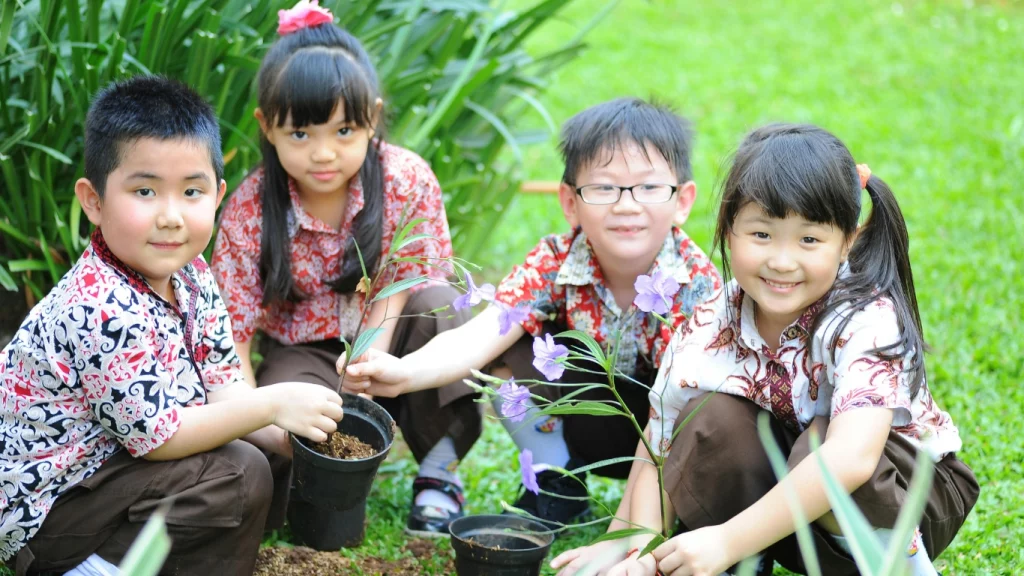
Gardening is a wonderful way to teach children patience, responsibility, and respect for nature. You can involve them by:

  • Planting seeds and watering plants
  • Pulling weeds and caring for a garden
  • Observing the growth of fruits and vegetables
  • Learning about different plants and their uses

    Outdoor activities like nature walks, scavenger hunts, and camping trips also encourage curiosity, problem-solving, and a connection with the environment.

6. Communication and Social Skills

Strong social skills are fundamental for success in life. Montessori parenting emphasizes respectful communication, active listening, and empathy. To nurture these skills, encourage children to:

  • Use polite phrases like “please” and “thank you”
  • Express their feelings and thoughts clearly
  • Engage in storytelling and imaginative play
  • Participate in family discussions and decision-making

    By fostering healthy communication habits, children develop emotional intelligence and build meaningful relationships.
Communication and Social Skills

Creating a Montessori-Friendly Home Environment

A Montessori-inspired home provides a space where children can freely explore and engage in meaningful activities. Here’s how you can create an environment that encourages learning

Child-Sized Furniture

Child-Sized Furniture

Low shelves, tables, and chairs allow children to access materials independently.

Organized Spaces

Organized Spaces

Clearly labeled bins and designated spaces for toys, books, and clothes promote order and responsibility.

Accessible Tools

Accessible Tools

Child-safe knives, step stools, and small brooms empower children to participate in household tasks.
Natural Materials

Natural Materials

Wooden toys, fabric baskets, and glass cups provide a sensory-rich experience.
Limited Distractions

Limited Distractions

A clutter-free space with fewer toys encourages focus and creativity.

The Benefits of Montessori Parenting

Incorporating Montessori principles into daily life offers numerous benefits, including:

Increased Independence

Increased Independence

Children learn to take care of themselves and their environment.

Enhanced Problem-Solving Skills

Enhanced Problem-Solving Skills

Hands-on experiences encourage critical thinking and decision-making.
Boosted Confidence

Boosted Confidence

Successfully completing tasks builds self-esteem and a sense of accomplishment.
Stronger Parent-Child Bond

Stronger Parent-Child Bond

Engaging in activities together fosters a deeper connection and mutual respect.

Lifelong Love for Learning

Lifelong Love for Learning

Children develop curiosity and enthusiasm for exploring the world around them.

Joyous Montessori_ A Home for Holistic Learning

Joyous Montessori: A Home for Holistic Learning

If you’re looking for an environment where your child can thrive using Montessori principles, Joyous Montessori is the perfect place. We provide a nurturing, hands-on learning experience that encourages independence, creativity, and confidence. Our experienced educators guide children through real-life activities that build essential life skills, ensuring a strong foundation for their future. At Joyous Montessori, we believe in fostering a love for learning in a safe, engaging, and enriching atmosphere.

Final Thoughts

Montessori parenting is a powerful approach that turns everyday experiences into valuable learning opportunities. By integrating life skills into daily routines, parents can raise confident, capable, and responsible individuals. Whether it’s cooking, cleaning, dressing, or gardening, each task contributes to a child’s growth and development in meaningful ways.

Embrace the Montessori method and watch your child thrive in an environment that nurtures independence, creativity, and joy in learning! And if you want a structured and engaging Montessori experience, consider enrolling your child at Joyous Montessori, where we turn learning into a lifelong adventure!