Blog
Montessori Education
When Should My Child Start Montessori?
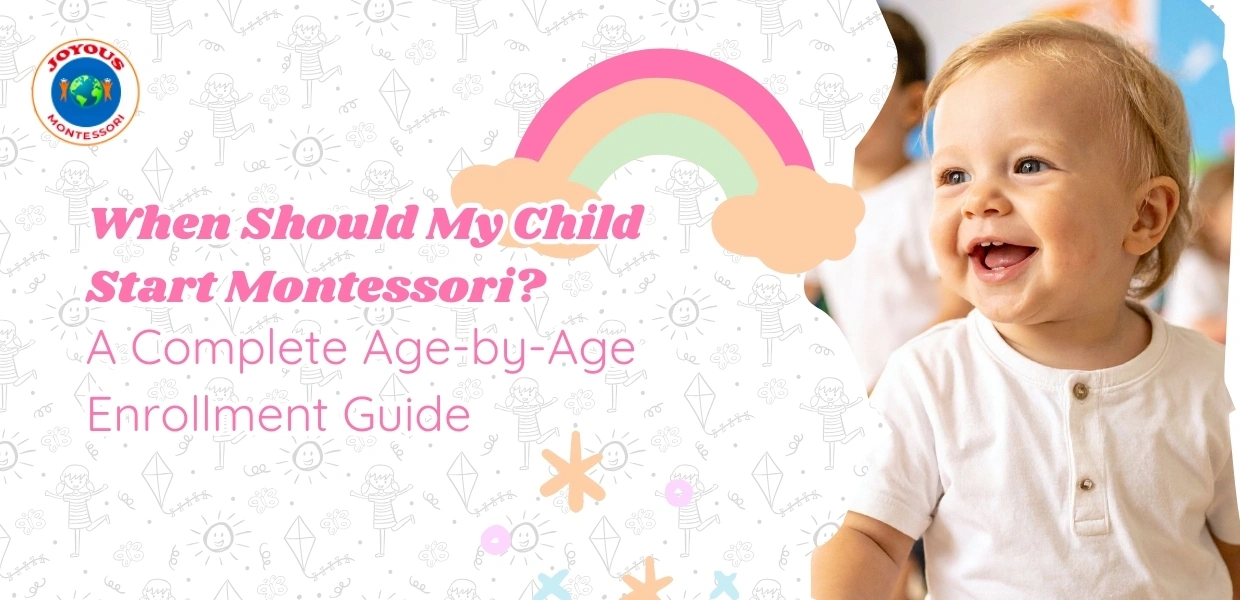
When Should My Child Start Montessori? A Complete Age-by-Age Enrollment Guide
As a parent, you’ve probably asked yourself at least once:
“Am I choosing the right time, and the right learning environment, for my child?”
And honestly, that’s a powerful question. Because the answer isn’t just about age. It’s about readiness, independence, confidence, and emotional development.
So let’s explore this together, step by step, so you can decide what feels right for your child.
Why Timing Matters in Montessori Education
Have you noticed how young children naturally want to do things on their own, pour water, choose toys, and repeat activities?
That’s not random curiosity. That’s development in action.
Montessori education is designed to meet children exactly where they are, especially during critical growth windows. The earlier the environment supports independence and confidence, the more naturally those skills develop.
But that leads to an important question:
Is there a “perfect” age to start Montessori?
Let’s break it down.
Montessori for Infants & Toddlers (0–3 Years)
At this stage, children are absorbing everything: language, movement, and emotional cues.
Ask yourself:
- Does my child want to explore freely?
- Are they frustrated when they can’t do things independently?
If so, Montessori environments for infants and toddlers focus on:
- Freedom of movement
- Sensory exploration
- Secure emotional bonding
- Simple choices that build early confidence
Even small routines, like choosing a toy or feeding themselves, help toddlers develop trust in their abilities.
👉 This stage isn’t about academics, it’s about building the foundation for independence.
Montessori Preschool (Ages 3–6): The Ideal Starting Point
If there’s one age range most parents ask about, it’s this one.
Why? Because ages 3 to 6 are often called the golden years of Montessori learning.
Ask yourself:
- Does my child enjoy doing things “by myself”?
- Are they curious, observant, or eager to help at home?
- Do they learn better by doing rather than sitting still?
Montessori preschool supports:
- Independent decision-making
- Self-paced learning
- Practical life skills
- Social confidence in mixed-age classrooms
Instead of asking, “Is my child ready for school?”
Montessori asks, “Is the environment ready for the child?”
And when the answer is yes, children thrive, academically, socially, and emotionally.
Montessori for Kindergarten & Early Elementary (Ages 6–9)
Some parents wonder:
“Is it too late to start Montessori after preschool?”
Not at all.
Children in this stage begin asking deeper questions:
- “Why does this happen?”
- “How does the world work?”
Montessori elementary programs nurture:
- Critical thinking
- Responsibility for learning
- Collaboration and leadership
- Confidence in problem-solving
Children who enter Montessori at this age often surprise parents with how quickly they adapt, because they finally feel trusted and respected as learners.
Signs Your Child is Ready for Montessori
Instead of focusing only on age, consider readiness.
Ask yourself:
- Can my child follow simple instructions?
- Do they show curiosity or focus during activities?
- Are they interested in doing things independently?
If you’re answering “yes” more often than “no,” your child may already be ready.
And here’s the reassuring part:
Montessori doesn’t rush children; it meets them where they are.
What If My Child Has Been in a Traditional Preschool?
This is a common concern.
Parents often ask:
“Will my child adjust to Montessori if they’re used to traditional classrooms?”
In most cases, yes, especially when the transition is supported thoughtfully.
Montessori classrooms offer:
- Clear routines
- Calm, structured environments
- Freedom within boundaries
Many children quickly relax once they realize they’re trusted to learn at their own pace.
When Should You Apply for Montessori?
Here’s something many parents don’t realize until it’s too late:
Montessori schools often have limited spots and waiting lists.
So ask yourself:
- Am I waiting for certainty, or avoiding a decision?
- Would I regret missing a spot more than starting a little early?
For most families, the best time to apply is 6–12 months before the intended start date, especially for popular age groups like preschool.
What Do You Want Your Child to Feel About Learning?
This might be the most important question of all.
Do you want your child to:
- Feel confident making choices?
- Love learning instead of fearing mistakes?
- Grow into an independent, capable individual?
If that resonates, Montessori isn’t just an educational choice; it’s a developmental partnership.
Ready to explore if Montessori is right for your child?
Schedule a school tour, ask questions, and observe the classroom. Sometimes, seeing your child’s reaction is the answer you’ve been looking for all along.
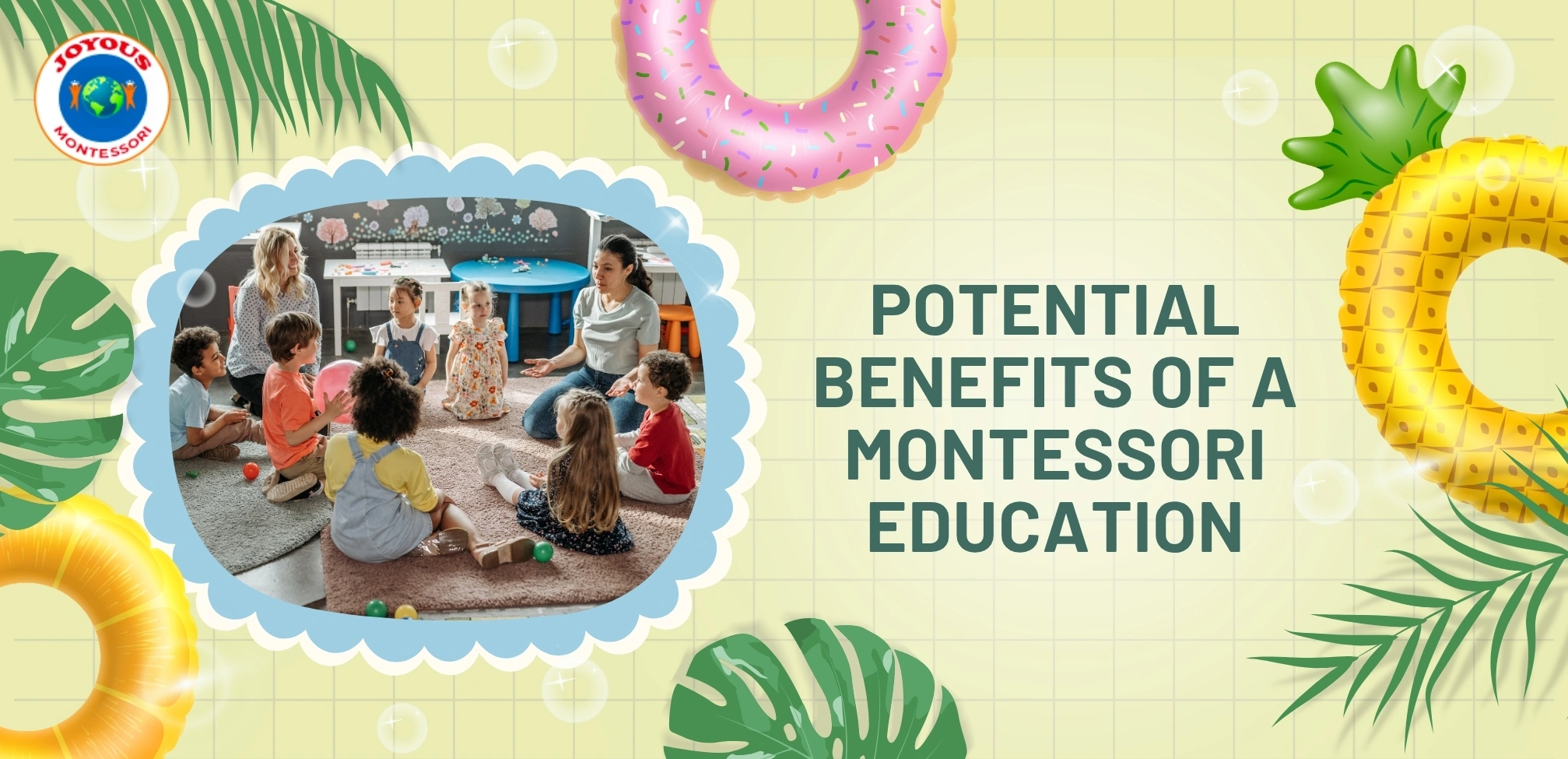
POTENTIAL BENEFITS OF A MONTESSORI EDUCATION
Choosing the right preschool for your child is one of the most important decisions you’ll make as a parent. With so many early childhood education options available, understanding the benefits of a Montessori education can help you make an informed choice.
Montessori schools provide a child-centered learning environment that encourages independence, confidence, and a lifelong love of learning from an early age.
How Montessori Learning Works
Montessori education is based on a child-centered philosophy that encourages children to learn through hands-on experiences and self-directed exploration. In a Montessori classroom, children choose from carefully prepared activities designed to support their developmental needs and interests.
Teachers serve as guides, offering support and introducing new concepts when children are ready. Mixed-age classrooms also encourage collaboration, leadership, and peer learning.
Supporting Social and Emotional Growth
Montessori classrooms promote respect, cooperation, and empathy. Through daily interactions with children of different ages, students develop strong communication and problem-solving skills.
Children learn how to work independently, collaborate with others, and resolve conflicts respectfully, helping them build emotional resilience and social confidence.
Developing Confidence and Self-Esteem
Montessori education supports the development of the whole child. By allowing children to learn at their own pace and make meaningful choices, they gain confidence in their abilities and develop a positive sense of self.
This nurturing environment helps children become independent learners who are motivated to explore new ideas and challenges.
Building Strong Math and Science Skills
Montessori classrooms use hands-on learning materials that make math and science concepts easier to understand. Children can explore abstract ideas through concrete experiences, helping them build a strong academic foundation.
By encouraging observation, experimentation, and critical thinking, Montessori education helps children develop important problem-solving skills.
Encouraging Independence and Everyday Life Skills
Montessori classrooms encourage independence from an early age. Children learn practical life skills such as organizing materials, caring for their environment, and taking responsibility for their work.
These experiences help build self-discipline, confidence, and essential life skills that benefit children both inside and outside the classroom.
How to Know if Montessori Is the Right Fit
While Montessori education offers many benefits, every child learns differently. Montessori programs are often a great fit for children who enjoy hands-on activities, independent learning, and structured environments that encourage exploration.
Considering your child’s personality, learning style, and developmental needs can help determine if Montessori is the right choice.
Choosing an Authentic Montessori School
Because the term “Montessori” is not trademarked, it’s important to choose a school that follows authentic Montessori principles and employs properly trained Montessori educators.
A quality Montessori program should provide a prepared learning environment, hands-on materials, and opportunities for children to develop independence, respect, and cultural awareness.
Discover the Joyous Montessori Difference
Montessori education helps children build confidence, independence, and a lifelong love of learning through hands-on experiences and self-directed discovery.
See how Montessori learning develops focus, independence, and confidence.
👉 Explore programs at Joyous Montessori
👉 Enroll today and support your child’s future success
👉 Book your tour today and meet our educators