Blog
Uncategorized
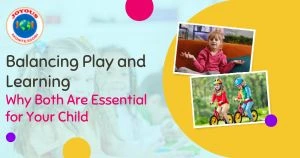
Balancing Play and Learning: Why Both Are Essential for Your Child
The Value of Play in Early Childhood
Key Benefits of Play
Fosters Creativity and Imagination
Builds Social Skills
Enhances Physical Development
Supports Emotional Growth
The Importance of Learning in Early Childhood
Key Benefits of Structured Learning
Cognitive Development
Language Skills
Discipline and Focus
Preparation for the Future
How Joyous Montessori Blends Play and Learning
At Joyous Montessori, we embrace a child-centered approach where play and learning coexist seamlessly. Our experienced teachers carefully design programs that allow children to explore their interests while engaging in structured activities that promote growth.
1. Hands-On Learning Activities
We use Montessori materials to engage children in tactile, exploratory learning. These activities, such as building with blocks or sorting objects, feel like play but teach essential concepts like math, geometry, and logical thinking.
2. Themed Play Areas
3. Outdoor Exploration
4. Music, Art, and Movement
Finding the Right Balance for Your Child
Tips for Balancing Play and Learning at Home
Encourage Free Play
Integrate Learning into Play
Model Curiosity
Set Routines
Communicate with Educators
The Joyous Montessori Promise
We believe that every child deserves a nurturing environment where they can grow into their best selves. By blending play and learning, we ensure that children not only excel academically but also thrive emotionally, socially, and physically.
Our commitment to fostering a love for learning and creativity sets us apart as a leader in early childhood education. At Joyous Montessori, children are given the tools to succeed while still enjoying the wonder and magic of childhood.
Schedule a Tour Today!
We invite you to visit Joyous Montessori and see how we balance play and learning in action. Meet our dedicated team, explore our vibrant classrooms, and discover how our programs can make a difference in your child’s life.
Ready to Begin the Journey?
Contact us to schedule your tour or inquire about enrollment today! Together, let’s nurture a generation of well-rounded, curious, and confident learners.
Materials Used in the Montessori Method
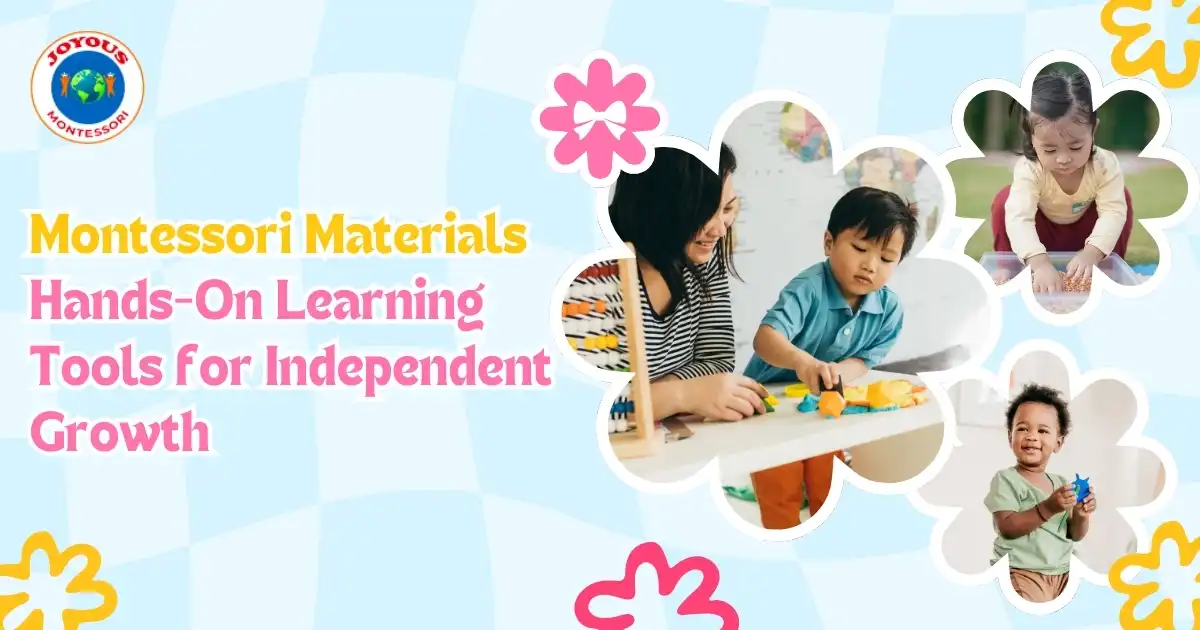
Montessori Materials: Hands-On Learning Tools for Independent Growth
Montessori materials are specially designed hands-on learning tools that provide children with opportunities to explore, discover, and develop essential skills through repetition and practice. Each material focuses on teaching one specific skill at a time, allowing children to master key learning concepts in a structured, engaging, and self-directed manner. At Joyous Montessori, we embrace these materials as integral components of a child’s learning journey, fostering independence, problem-solving, and cognitive development.
What are Montessori Materials?
Montessori materials are thoughtfully crafted tools that stimulate curiosity, encourage hands-on exploration, and promote independent learning. These materials are carefully designed to align with a child’s natural developmental progress and cater to different learning styles.
Dr. Maria Montessori believed that “Nothing goes into the mind that does not first go through the hands.” That is why Montessori materials are tactile, interactive, and engaging. They offer a progressive learning experience, presented in sequence from simple to complex, ensuring children build upon their knowledge step by step.
A trained Montessori guide introduces each material through a Key Lesson, after which children are encouraged to use the material independently. Once they complete the activity, they return the material to its designated place, reinforcing responsibility and organization.
Unique Features of Montessori Materials
Montessori materials stand out from traditional educational tools in several ways:
- Hands-on learning tools that teach one skill at a time
- Designed for multiple learning styles, accommodating visual, auditory, and kinesthetic learners
- Encourage mastery through repetition and practice
- Made of natural materials and real-life objects for sensory-rich experiences
- Foster independence, fine motor development, and concentration
- Promote problem-solving and self-correction
- Help simplify abstract concepts through tangible experiences
- Enable children to learn at their own pace
- Hands-on learning tools that teach one skill at a time
- Designed for multiple learning styles, accommodating visual, auditory, and kinesthetic learners
- Encourage mastery through repetition and practice
- Made of natural materials and real-life objects for sensory-rich experiences
- Foster independence, fine motor development, and concentration
- Promote problem-solving and self-correction
- Help simplify abstract concepts through tangible experiences
- Enable children to learn at their own pace
How Do Montessori Materials Work?
Hands-On Exploration
Each Montessori material is crafted to guide children toward key learning outcomes through active participation. Whether it’s the Pink Tower for visual discrimination, the Moveable Alphabet for early literacy, or the Number Rods for math concepts, each material helps children absorb knowledge through direct experience.
Control of Error
A defining feature of Montessori materials is the built-in “control of error,” which allows children to self-correct their mistakes. This fosters confidence, independence, and resilience in learning. For example, if a child is using knobbed cylinders and places one in the wrong slot, it will not fit correctly, prompting them to reassess and adjust without adult intervention.
Sequential Learning Path
Montessori materials are arranged in a logical sequence, progressing from simple to more complex activities. In the classroom, materials are displayed from left to right, mirroring the natural progression of reading and writing. This structured order enables children to advance through the curriculum at their own pace while steadily building their skills.
Fine Motor Skill Development
Manipulating Montessori materials requires precise hand movements, strengthening fine motor skills and hand-eye coordination. Activities like pouring, threading, stacking, and tracing prepare children for writing and other essential life skills. This hands-on engagement fosters focus, patience, and attention to detail.
One Concept at a Time
Each Montessori material isolates a single concept to ensure children can focus on mastering one skill before moving on to the next. For instance, the Spindle Box teaches counting and quantity recognition, while the Sandpaper Letters introduce phonetic sounds. This method ensures that learning is deep and meaningful.
Encouraging Independent Learning
Montessori materials are designed for self-directed learning. Because of their interactive nature, children can engage with them without constant adult supervision. This autonomy helps develop confidence, self-motivation, and a love for learning.
Conclusion
At Joyous Montessori, we believe in the power of Montessori materials to create a rich, immersive, and effective learning environment. These hands-on learning tools allow children to explore, discover, and master skills at their own pace, fostering independence, confidence, and a lifelong love for learning. By integrating Montessori materials into daily activities, we provide children with the foundation for academic success, critical thinking, and personal growth. We invite you to schedule a tour of our school to experience firsthand how Montessori materials enrich children’s learning and development.
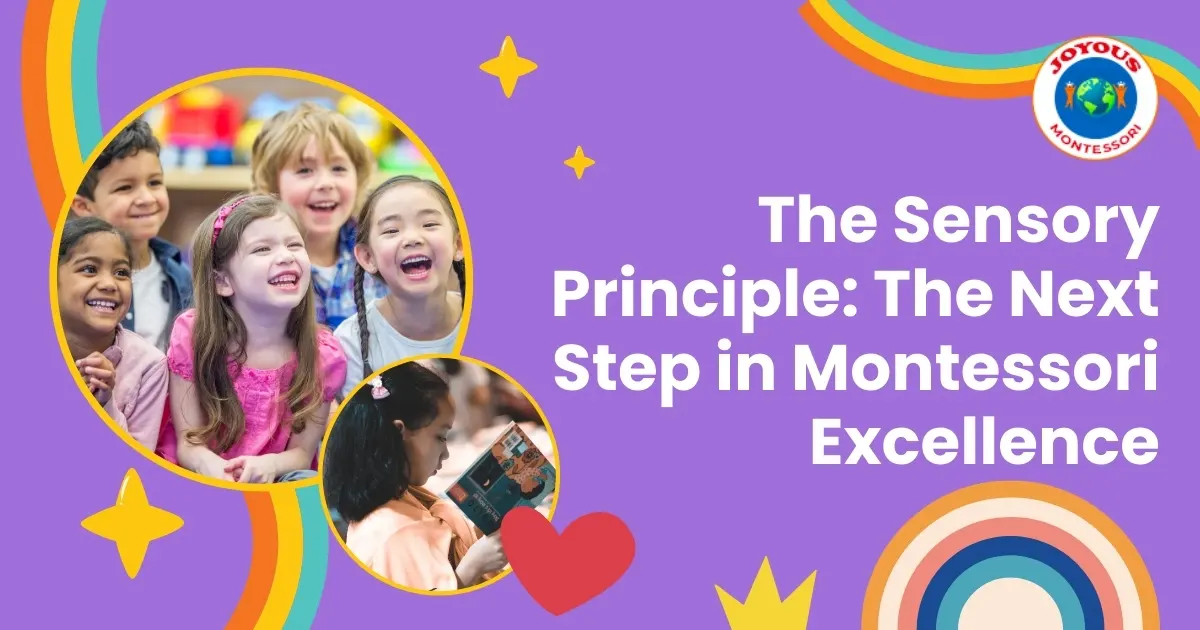
The Sensory Principle: The Next Step in Montessori Excellence
Core Principles of Excellence
Building a Montessori school of exceptional quality relies on several guiding principles:
Principle 1: Unwavering Dedication to Excellence
A world-class Montessori school commits to excellence in all areas: programs, facilities, resources, and operations. Schools must define their unique identity, mission, and values, aiming to be benchmarks of excellence within the Montessori community. They thoughtfully design and fund plans that support their high standards across every area.
Principle 2: Institutional Memory and Integrity
A strong institutional memory is essential for a Montessori school’s long-term success. Maintaining a clear sense of core values and institutional culture, “this is who we are,” helps schools avoid making compromises that may threaten their educational integrity. Over time, a well-defined school culture enables Montessori schools to grow naturally while remaining true to their foundational values.
Principle 3: Clear Mission, Core Values, and Educational Beliefs
World-class Montessori schools craft a distinct mission and core values that guide all strategic decisions. Montessori practice varies widely, so defining a school’s unique character ensures parents, staff, and the community understand what makes it distinct. This consistency in mission and values is the school’s foundation.
Principle 4: Consistency in Philosophy and Practice
A cohesive approach to Montessori philosophy across all classes, levels, and school years is crucial. In exceptional schools, consistency reassures parents and fosters a unified learning experience for students. The Montessori journey is best realized when each classroom operates in harmony with the school’s broader educational goals.
Principle 5: Leadership by a Consensus-Building Montessori Leader
A Montessori school’s Head of School plays a pivotal role in defining its character. The most successful Heads of School are visionary leaders who embody Montessori values and have the skills to inspire others. World-class Montessori schools rely on leaders who are Montessori-trained and wholeheartedly committed to the philosophy, bringing both educational and operational expertise.
Principle 6: Clear Authority and Accountability
A Montessori school with a defined line of authority promotes a stable environment. The Head of School should have the authority to oversee all programs, with faculty and staff members reporting directly to them. This arrangement ensures efficient decision-making and minimizes conflicts, ultimately creating a cohesive, supportive school culture.
Principle 7: Admissions Focused on Family Alignment
Top Montessori schools prioritize admissions processes that seek families aligned with Montessori values rather than merely filling seats. Montessori schools build a committed community by welcoming families who share the school’s educational philosophy. Such an approach fosters long-term relationships and encourages families to see Montessori education as an investment in their child’s future.
Principle 8: Proactive Parent Communication
Parents in world-class Montessori schools expect regular, meaningful updates on their child’s progress. Effective communication channels, addressing both academic and social growth, help maintain parent satisfaction and confidence. By keeping parents informed and engaged, Montessori schools create a strong partnership that supports each child’s development.
Principle 9: Stable Enrollment
Minimizing student attrition is a priority for excellent Montessori schools, as high turnover can affect the classroom dynamic and program consistency. A well-designed Montessori program relies on students staying for a full three-year cycle, particularly at key stages such as primary and elementary levels. Stable enrollment reflects the quality of the Montessori experience and encourages classroom leadership.
Principle 10: Financial Planning for Long-Term Stability
Financial health is the backbone of any world-class school. By establishing sound budgets, tracking finances, and planning for future growth, Montessori schools ensure they have the resources to support excellence. This planning is essential to maintaining a high-quality environment for students and staff alike.
Maria Montessori said: “The education of the senses should be begun methodically in infancy and should continue during the entire period of instruction which is to prepare the individual for life in society.” Source: Maria Montessori & The Method of Early Child Development.
Maria Montessori wrote continuously about the spiritual journey and self-awareness that every teacher must experience in order to be effective. Our Sensory Curriculum gives children some of their first experiences using their senses to experience and make sense of the world. This early development sets the foundation for future educational achievements.
The journey to creating a world-class Montessori school, like Joyous Montessori, involves a consistent dedication to these principles. By following this path, Joyous Montessori strives to be a center of excellence, serving families who are passionate about the Montessori philosophy and looking for an environment where their children can truly thrive.
The Montessori Program: Practical Life
The earliest years of a child’s life are filled with discovery, growth, and boundless potential. At Joyous Montessori, we understand that these formative years are when children begin shaping their independence, confidence, and understanding of the world. The Montessori Practical Life Program is the foundation of this journey, helping children build essential life skills while fostering responsibility, focus, and joy in everyday tasks.
What is Practical Life in Montessori Education?
In Montessori, “Practical Life” refers to activities that reflect real-life experiences, tasks that children see adults doing every day. These exercises are not just chores; they are meaningful opportunities for children to develop coordination, independence, and concentration.
From pouring water and folding cloths to buttoning shirts and sweeping floors, these activities allow children to gain confidence in their abilities and pride in their accomplishments. As Dr. Maria Montessori beautifully said, “The hands are the instruments of man’s intelligence.” Through hands-on work, children learn by doing, building not only skills but character.
The Purpose Behind Practical Life Activities
The goal of Practical Life education is to help children achieve independence and control over their movements, which lays the groundwork for all other areas of learning. Each activity strengthens motor coordination, concentration, order, and self-discipline, qualities that extend far beyond the classroom.
At Joyous Montessori, our teachers act as gentle guides, demonstrating how to perform each task while allowing every child to repeat and refine it at their own pace. This balance of freedom and structure helps children internalize the satisfaction of completing meaningful work, nurturing both confidence and competence.
The Four Key Areas of Practical Life
Montessori Practical Life lessons are carefully organized into four main groups, each designed to guide children through progressive stages of learning and self-development.
1. Preliminary Exercises
These are the first steps toward independence. Children practice simple yet essential movements such as pouring, spooning, opening and closing containers, or folding napkins. Each activity refines coordination and helps the child gain mastery over their hands and body.
2. Applied Exercises
In this group, children begin to care for themselves and their surroundings. They learn personal care skills like washing hands, fastening buttons, and zipping jackets, as well as environmental care such as sweeping, dusting, watering plants, and feeding classroom pets. These experiences teach respect for oneself and one’s environment, both key Montessori values.
3. Grace and Courtesy
Practical Life also includes lessons on kindness, empathy, and respect. Children practice polite greetings, waiting their turn to speak, offering help, and expressing gratitude. These exercises nurture emotional intelligence and help children navigate social situations with confidence and care, skills that last a lifetime.
4. Control of Movement
Balance, coordination, and self-regulation are strengthened through mindful movement activities such as walking on a line, carrying objects carefully, or practicing silence. These exercises may seem simple, but they teach focus, patience, and composure, qualities that support future academic and personal success.
Why Practical Life Matters So Much
The Practical Life program is not about keeping children busy; it’s about building independence and a sense of purpose. Every activity is meaningful and connects children to real-world experiences.
By engaging in these tasks:
- Children learn responsibility through daily routines.
- They develop fine and gross motor skills through repetition and focus.
- They build confidence by mastering real-life challenges.
- They experience joy in contributing to their community.
This foundation of independence supports success in every other area of Montessori learning, from math and language to cultural studies and beyond.
How Joyous Montessori Brings Practical Life to Action
At Joyous Montessori, our classrooms are thoughtfully prepared to inspire self-directed learning. Every Practical Life material is real, functional, and child-sized, from glass pitchers for pouring to brooms that fit tiny hands.
Children are encouraged to take ownership of their space, setting tables for snack time, cleaning up spills, or arranging flowers for the classroom. These seemingly small actions create powerful lessons in accountability and self-reliance.
Our teachers guide with patience and respect, understanding that independence develops through practice, not perfection. Children are celebrated for their effort and growth, not just their results.
Shaping Capable, Confident, and Caring Individuals
From birth through age six, children are in a sensitive period for developing coordination, order, concentration, and independence. Practical Life activities directly support these natural stages of growth.
As children progress through the Montessori Practical Life curriculum, they evolve into capable, confident, and considerate individuals, prepared to handle both the joys and challenges of life.
Through these simple yet profound lessons, they learn that real work brings real satisfaction. They gain an understanding that their actions matter, their choices have impact, and their independence is something to be proud of.
At Joyous Montessori, we see every small pour, fold, and handshake as a step toward shaping tomorrow’s leaders, individuals who are mindful, responsible, and full of purpose.
The Montessori Practical Life Program lays the foundation for lifelong learning. It’s where children first learn to trust themselves, to care for others, and to respect their environment. At Joyous Montessori, we celebrate each milestone of this beautiful journey, helping every child grow into an independent, capable, and confident individual ready to embrace the world.